


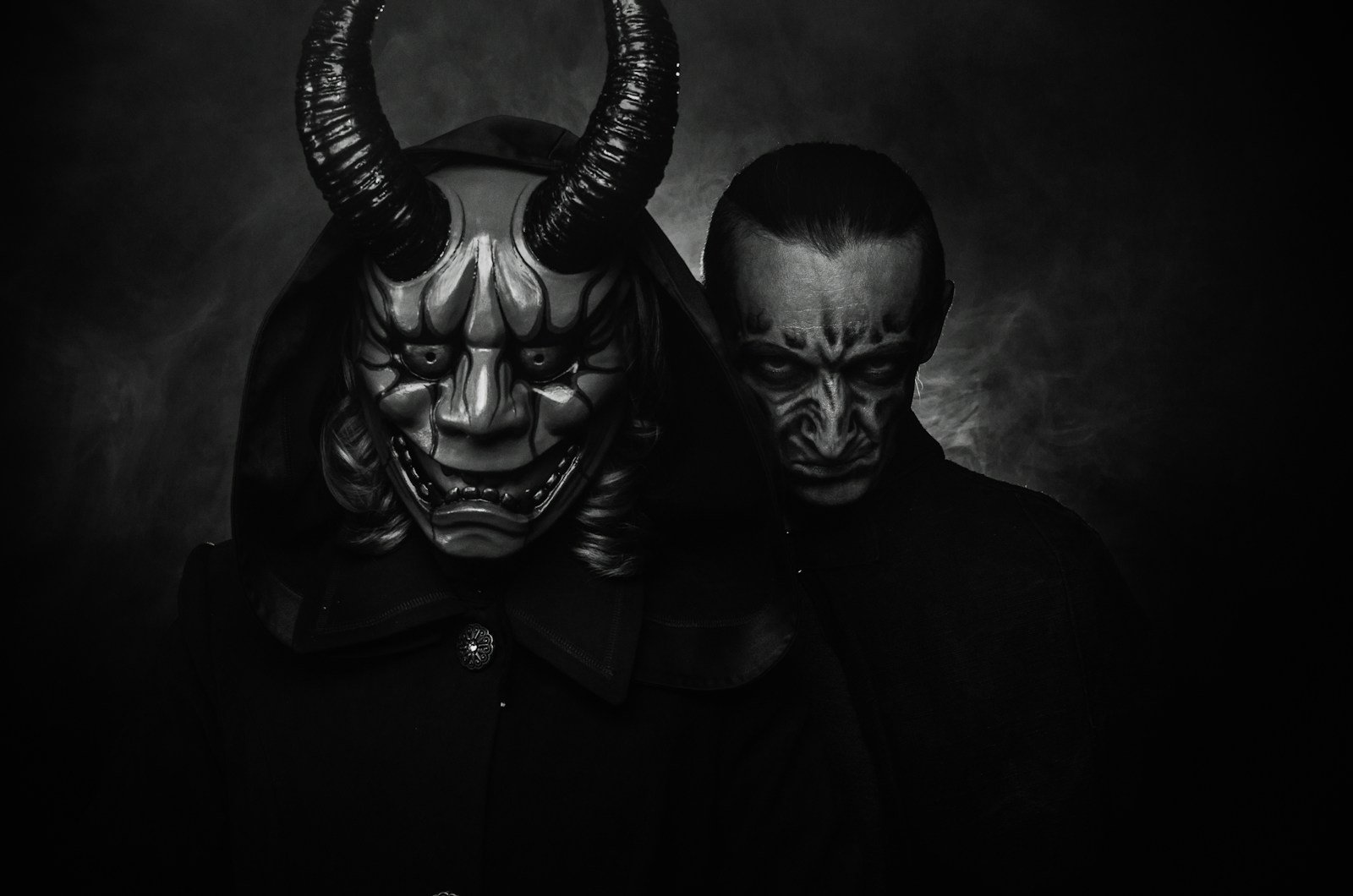
The human endeavor to conceptualize and categorize non-human intelligences is a cornerstone of comparative religion and mythology. Entities such as Jinn, Archons, demons, angels, and the Elohim represent distinct classifications that emerge from specific cultural, linguistic, and theological contexts. While popular culture often conflates these beings into a simplistic binary of “good” versus “evil,” a deeper examination reveals profound differences in their ontology, purpose, and the cosmological roles they inhabit. Understanding these distinctions requires a journey through time, tracing the etymology of their names and the evolution of their meanings across the civilizations that gave them form.
The term Elohim stands as a foundational and uniquely complex concept within the Hebrew tradition. Etymologically, it is the plural form of “Eloah,” a Hebrew word for God, yet it is frequently used in the Torah with singular verbs to denote the one God of Israel. This grammatical peculiarity, known as the “plural of majesty” or “plural of intensity,” suggests a being of incomprehensible power and magnitude. The Elohim are not merely a class of beings but represent the divine creative authority itself. In some scriptural contexts, however, “Elohim” can refer to divine beings in a council of God (as in Psalm 82) or even to human judges acting with divine authority. This places the Elohim at the apex of the hierarchy, fundamentally distinct as the source of creation and moral law, rather than creatures within the created order.
In contrast, Angels (from the Greek angelos, meaning “messenger,” a translation of the Hebrew mal’akh) are unambiguously created beings. They function primarily as intermediaries, servants, and soldiers of the Divine (the Elohim). In the Abrahamic traditions—Judaism, Christianity, and Islam—angels are typically depicted as beings of light or spirit, created for specific purposes such as delivering revelations, offering protection, or executing divine judgment. Their nature is generally considered to be benevolent and obedient, though the concept of the fall of some angels introduces a nuance. Their identity is inextricably linked to their function: they are defined by their service to a higher power, existing in a structured celestial bureaucracy that reflects the divine will.
The concept of Demons underwent a significant evolution, particularly within the Zoroastrian and subsequent Judeo-Christian traditions. The English word “demon” derives from the Greek daimon, which originally referred to a lesser deity or a guiding spirit—a force that could be either beneficial or harmful. Socrates, for instance, spoke of a benevolent daimonion. However, through the influence of Zoroastrian dualism, which posited a cosmic struggle between a good god (Ahura Mazda) and an evil spirit (Angra Mainyu), and its adoption into intertestamental Jewish thought and early Christian theology, the daimon was demonized. In Christian cosmology, demons became synonymous with fallen angels—beings who, through an act of willful rebellion (often associated with Satan or Lucifer), chose to oppose the Elohim. Thus, demons share an angelic origin but are defined by their malevolence, deception, and intent to corrupt humanity.
The Jinn offer a dramatically different paradigm, originating from pre-Islamic Arabian mythology and fully integrated into Islamic theology. The word jinn derives from an Arabic root meaning “to hide” or “to be concealed,” describing beings created from “smokeless fire” who inhabit an unseen world parallel to mankind. Unlike angels, who are made of light and possess no free will in classical Islam, the jinn are volitional beings, endowed with the capacity to choose between good and evil. This places them in a category much closer to humans than to angels or demons. Islamic tradition holds that prophets were sent to the jinn as well as to humans, and that they will be judged on the Day of Resurrection. Some jinn are pious Muslims, others are neutral, and malevolent tribes are known as shayatin (devils), with Iblis (Satan) being a jinn who refused to bow to Adam. This framework establishes the jinn as a separate creation with a distinct moral narrative.
The term Archons emerges from a specific esoteric context: Gnosticism, a diverse set of religious movements in the early Christian era. Etymologically, “Archon” is Greek for “ruler” or “lord.” In Gnostic cosmology, the Archons are not rebellious servants of a benevolent God but are instead the malevolent or ignorant agents of a false god, the Demiurge. This Demiurge, often identified with the Yahweh of the Old Testament, is a lesser, arrogant deity who ignorantly created the flawed, material world as a prison for the divine spark of humanity. The Archons serve as the jailers of this prison, ruling the planetary spheres and actively working to keep human souls trapped in ignorance of their true, divine origin. Their difference from demons is crucial: demons tempt humans to sin against a transcendent God, while Archons deceive humans into believing the material world is the ultimate reality, thus preventing their salvation.
The temporal and cultural origins of these concepts further illuminate their distinctions. The Elohim and the angelic hierarchy are products of Ancient Near Eastern monotheism, evolving from earlier Canaanite polytheism where the “sons of El” were a pantheon. Demons, in their fully developed malevolent sense, are largely a product of the Axial Age (c. 800–200 BCE), influenced by Persian dualism which provided a coherent explanation for the existence of evil. The jinn are rooted in the animistic and polytheistic beliefs of pre-Islamic Arabia, which were then assimilated and redefined by the rigorous monotheism of the Quran in the 7th century CE. The Archons are a Hellenistic phenomenon, arising from the syncretism of Greek philosophy (especially Platonic contempt for the material world) and radical reinterpretations of Jewish scripture in the first few centuries CE.
Linguistically, the names themselves are taxonomic. “Elohim” speaks to power and divinity. “Angel” and “Archon” are functional titles—messenger and ruler, respectively. “Demon” is a term that has been semantically inverted, from a neutral spirit to an evil one. “Jinn” is a descriptive term based on their fundamental nature—hiddenness. This etymology underscores that these are not interchangeable labels for the same phenomenon but terms pointing to unique entities conceived within different philosophical problems: the nature of God (Elohim), divine communication (Angels), the origin of evil (Demons), the coexistence of other sentient life (Jinn), and the problem of a flawed creation (Archons).
When these categories are forced into contact, interesting syncretisms occur. In later Islamic mysticism and folklore, some jinn are described in terms reminiscent of demons or fallen angels. In Christian and Gnostic magic, Archons and demons were sometimes conflated as hostile spiritual forces. However, their core definitions remain anchored in their source traditions. A demon is defined by its fallen state from grace; an Archon is defined by its service to a false creator; a jinn is defined by its creation from fire and its parallel society.
In conclusion, the differences between Jinn, Archons, demons, angels, and the Elohim are profound and systematic. They are not merely different names for ghosts or spirits but represent distinct cosmological answers to fundamental questions about creation, morality, and the structure of the universe. The Elohim represent sovereign divinity; angels are obedient celestial functionaries; demons are volitional antagonists to the divine plan; jinn are an independent, parallel species with moral agency; and Archons are the oppressive rulers of a flawed material existence. To blur these distinctions is to overlook the rich and varied tapestry of human thought attempting to map the unseen world, a project shaped indelibly by time, language, and culture.
